



Brass Vishnu Lakshmi And Krishna Wall Hanging (9.5 Inch)
HEIGHT - 9.5 INCHES (24cm)
WIDTH - 1.8 INCHES (4.5cm)
LENGTH - 8 INCHES (20cm)
WEIGHT - 1.55 KG
QUANTITY - 1 PIECE
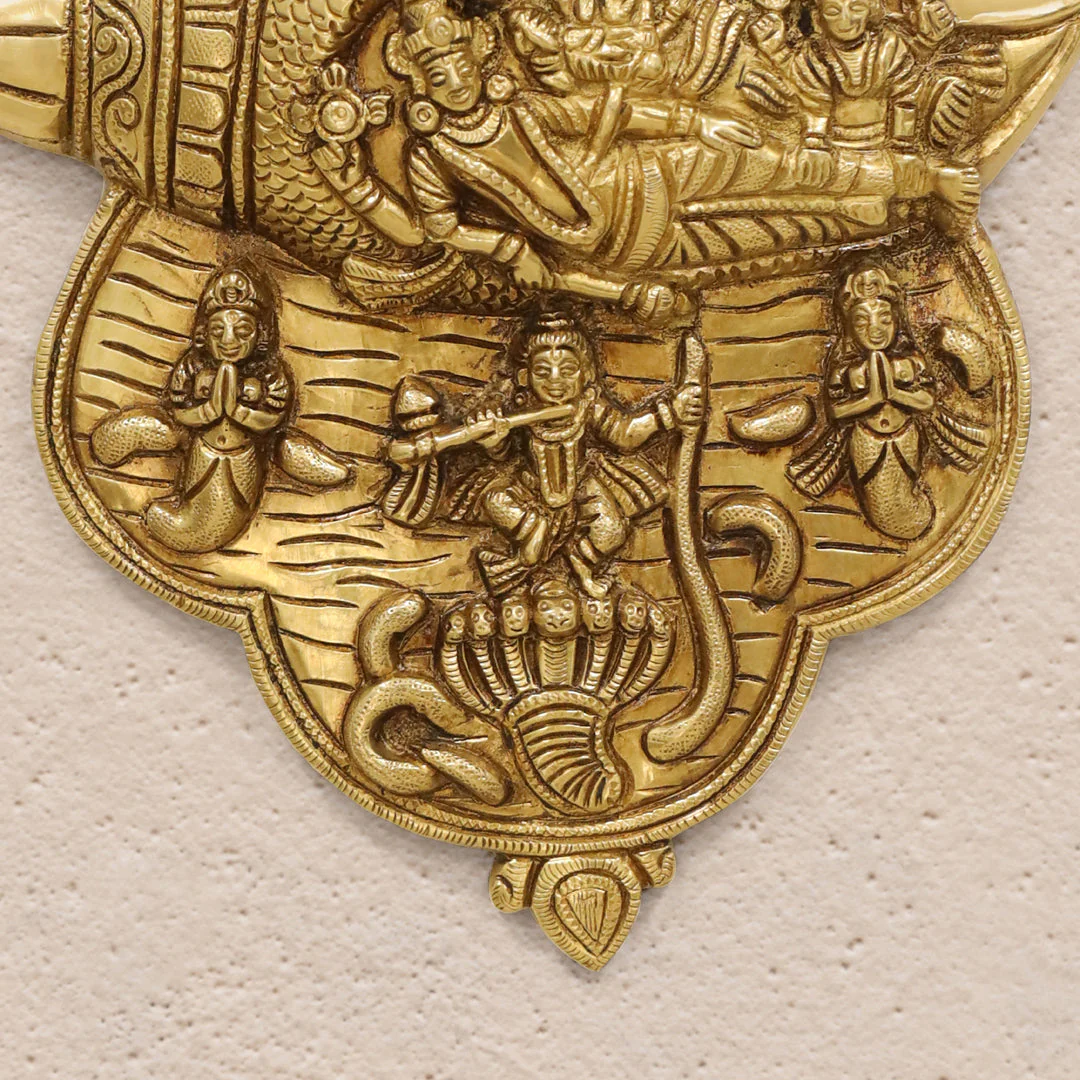
The wall hanging depicts Vishnu and Lakshmi resting on the serpent Sesha, with Krishna playing the flute. It is a representation of a significant myth in Hinduism. In this wall hanging Vishnu, the preserver, and his consort Lakshmi are central figures. The serpent Sesha symbolizes creation's limitless possibilities. Krishna, often considered an avatar of Vishnu, is also present. The scene represents the cosmic cycle of creation and regeneration in Hinduism. Lakshmi is shown massaging Vishnu's feet, signifying her role in waking him to begin creation. This imagery is found in various forms of Hindu art and sculpture. It symbolizes divine love and the pursuit of Lakshmi by Vishnu. The depiction is related to the concept of Vaikuntha-Kamalaja, an androgynous form of Vishnu.
.
.
Original: $63.42
-70%$63.42
$19.03Product Information
Product Information
Shipping & Returns
Shipping & Returns
Description
HEIGHT - 9.5 INCHES (24cm)
WIDTH - 1.8 INCHES (4.5cm)
LENGTH - 8 INCHES (20cm)
WEIGHT - 1.55 KG
QUANTITY - 1 PIECE
The wall hanging depicts Vishnu and Lakshmi resting on the serpent Sesha, with Krishna playing the flute. It is a representation of a significant myth in Hinduism. In this wall hanging Vishnu, the preserver, and his consort Lakshmi are central figures. The serpent Sesha symbolizes creation's limitless possibilities. Krishna, often considered an avatar of Vishnu, is also present. The scene represents the cosmic cycle of creation and regeneration in Hinduism. Lakshmi is shown massaging Vishnu's feet, signifying her role in waking him to begin creation. This imagery is found in various forms of Hindu art and sculpture. It symbolizes divine love and the pursuit of Lakshmi by Vishnu. The depiction is related to the concept of Vaikuntha-Kamalaja, an androgynous form of Vishnu.
.
.